
24 Jan, 2026
3 min read
UK Inquiry Concludes Putin Authorized 2018 Novichok Attack on Sergei Skripal
A British public investigation has determined that Russian President Vladimir Putin ordered the 2018 Novichok poisoning of former Russian double agent Sergei Skripal, describing the act as a "reckless" exercise of authority that led to tragic collateral damage.
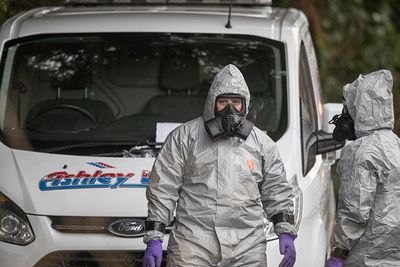
In March 2018, Skripal and his daughter Yulia were discovered unconscious on a bench in Salisbury, England, after the military-grade nerve agent was applied to Skripal's home front door handle. Months later, 44-year-old Dawn Sturgess died after coming into contact with a discarded perfume bottle containing the toxin, which had been used by Russian operatives to smuggle the poison into the UK.
The inquiry, led by former UK Supreme Court judge Anthony Hughes, affirmed with certainty that a team of GRU intelligence officers was responsible for the attempted assassination of Skripal, who had sold secrets to Britain and resettled there following a 2010 spy exchange.
"I have concluded that the operation to assassinate Sergei Skripal must have been authorized at the highest level, by President Putin," Hughes stated in the report, adding, "The evidence that this was a Russian state attack is overwhelming."
Russia has consistently denied any involvement, dismissing the accusations as propagandistic. Efforts to obtain a comment from the Russian embassy in London were unsuccessful.
The report highlighted the perpetrators’ disregard for public safety, noting that the agents irresponsibly discarded the highly lethal nerve agent container, which contained enough poison to kill thousands.
Hughes condemned these "astonishingly reckless" actions, assigning moral accountability not only to the operatives and their GRU commanders but also to those sanctioning the attack, ultimately implicating Putin himself in the death of Dawn Sturgess.
In response, British authorities have charged three suspected Russian operatives in their absence. The government simultaneously announced fresh sanctions targeting the GRU and summoned Moscow's ambassador amid what it described as an ongoing hostile campaign.
Prime Minister Keir Starmer affirmed, "The UK will always stand up to Putin’s brutal regime and call out his murderous machine for what it is."
The poisoning incident provoked the largest diplomatic expulsions between East and West since the Cold War. Relations between the UK and Russia have further deteriorated following Russia’s 2022 invasion of Ukraine, with Britain providing substantial military support to Kyiv.
The accused Russian agents have appeared on Russian television denying involvement, claiming innocence and asserting they were tourists.
The inquiry characterized the attack as more than mere retribution against Skripal; it was intended as a bold public message demonstrating Russia’s readiness to assert its interests decisively on the global stage.
The report references prior aggressive Russian actions such as the 2014 annexation of Crimea and the downing of Malaysia Airlines flight MH17. It notes Putin’s prior denunciations of Skripal but found no evidence indicating Skripal faced imminent danger or that additional protective measures were feasible.
This investigation is the second major UK inquiry attributing direct responsibility to Putin for lethal attacks on British soil, following a 2016 conclusion implicating him in the radioactive poisoning of Russian dissident Alexander Litvinenko in London.
Recommended For You
Cavite City Welcomes Its First Polish Chick at City Aviary
Jan 24, 2026
Caridad Pingol
FIFA Futsal World Cup Quarterfinals Kick Off Tonight at PhilSports Arena
Jan 24, 2026
Caridad Pingol
Tacloban City Undertakes Major Drainage Declogging to Prevent Flooding
Jan 24, 2026
Urbano Tolentino
DoubleDragon to Launch Hotel101 in Milan as Part of Global Expansion
Jan 24, 2026
Tino Salonga