
24 Jan, 2026
3 min read
Women on LinkedIn Alter Profiles to Expose Potential Gender Bias in Algorithm
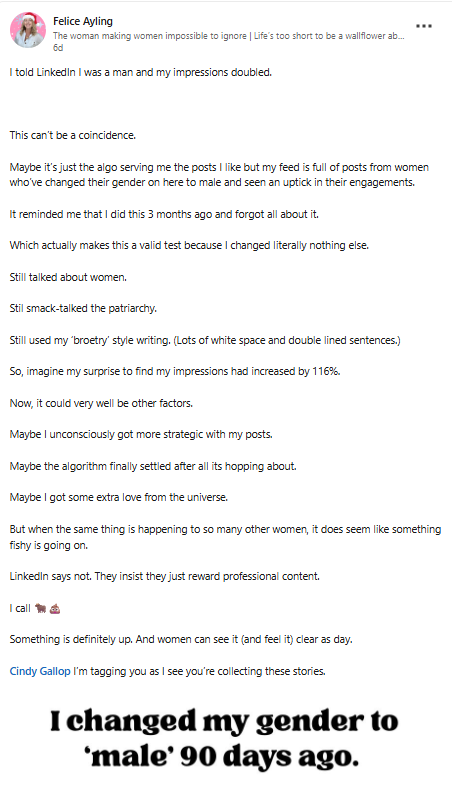
In a recent wave of digital activism, numerous female LinkedIn users have changed their gender settings to male and even updated their photos with fake mustaches to challenge what they describe as a bias in the platform's algorithm.
Users recount notable increases in visibility and interaction after adopting male identities. Some transformed their names—"Simone" to "Simon"—altered pronouns to he/him, and employed AI tools to revise their posts with language projecting a more traditionally masculine tone. To underscore the experiment with levity, several added images of themselves sporting stick-on mustaches.
London-based entrepreneur Jo Dalton reported a 244% surge in reach after modifying her pronouns, stating, "I changed my pronouns and accidentally broke my own LinkedIn engagement records," and humorously added her mustached photo "purely in the interest of science to see if I can trick the algorithm into thinking I am a man."
An AFP reporter who switched her LinkedIn gender to male observed a significant jump in post impressions and overall engagement compared to previous weeks, reinforcing the perception of unequal algorithmic treatment.
Malin Frithiofsson, CEO of Sweden's Daya Ventures, emphasized that these actions highlight existing "gendered discrepancies" on the platform. She noted, "Women are changing their LinkedIn gender to male, swapping their names and profile photos, even asking AI to rewrite their bios as 'if a man wrote them.' And their reach skyrockets."
LinkedIn, however, has dismissed claims of systemic gender bias. A company spokesperson stated, "Our algorithms do not use gender as a ranking signal, and changing gender on your profile does not affect how your content appears in search or feed."
Despite this assertion, many women experiencing enhanced engagement after switching genders are demanding greater transparency around LinkedIn’s opaque algorithms, which determine content visibility.
Frithiofsson clarified, "I don’t believe there’s a line of code in LinkedIn’s tech stack that says 'if female < promote less.' However, gendered bias can emerge through data inputs, reinforcement loops, and cultural norms around what a 'professional voice' sounds like."
LinkedIn executive Sakshi Jain explained in a blog post that the site’s AI analyzes hundreds of variables, including user activity and network size, to decide post prominence. Jain also cited increased content volume leading to heightened competition for user attention.
Nonetheless, skepticism remains on the network, especially given the significant implications of LinkedIn engagement for career advancement and income generation. UK-based journalist Rosie Taylor found that her profile’s performance improved dramatically during a week when she portrayed herself as male, with unique newsletter visitors rising 161% and new weekly subscriptions increasing by 86%.
Taylor reflected, "Who knows how much more successful I might have been if the algorithm had thought I was a man from the start?"
This ongoing debate sheds light on the potential influence of algorithmic design on gender dynamics within professional digital spaces, prompting calls for clearer disclosure and fairness in content promotion mechanisms.
Recommended For You
Lawmaker Condemns Harassment of LGBTQIA+ Community in Maguindanao del Sur
Jan 24, 2026
Urbano Tolentino

Tacloban City Undertakes Major Drainage Declogging to Prevent Flooding
Jan 24, 2026
Urbano Tolentino

International Master Arca Secures Philippines' Sole Gold at Asian Youth Chess Championships
Jan 24, 2026
Caridad Pingol
Social News Blog Highlights Political Figures and Their Networks
Jan 24, 2026
Ciriaco Manlapig